



In our earlier articles, we discussed the possible complications of bone augmentation. There we already pointed out that smoking is strictly forbidden for people suffering from conditions involving bone loss. Now we will explain why. This article is intended for anyone who has undergone or is considering undergoing bone graft surgery and who, as a smoker, would like to understand the risks of smoking in relation to recovery and the success of the procedure.

In our article we cover the following topics.
- Bone grafting in brief
- General harmful effects of smoking
- Dental-related risks caused by smoking
- Does smoking affect the jaw?
- How long should you not smoke after bone reconstruction?
Bone grafting in brief
Jawbone loss used to pose significant challenges for medical science. However, with the revolutionary method of bone augmentation, even missing bone volume in the jaw can be replaced and rebuilt. After bone augmentation, the development of new, living bone can begin. Thanks to this procedure, a solid foundation is created in the oral cavity for the inserting dental implants.
What causes bone loss? Can smoking be a cause?
Jawbone loss can be caused, among other things, by long-term denture wear, advanced periodontitis, and tooth loss due to accidents. Smoking is a serious risk factor in the development of this condition.
General harmful effects of smoking
It is standard protocol before any surgical procedure for the doctor to assess the patient’s overall condition. This is no different in the case of bone grafting surgery, as the patient’s general state of health influences the success of the operation. Tobacco smoke contains many harmful substances such as tar, carbon monoxide, nicotine, polycyclic aromatic hydrocarbons, hydrogen cyanide, arsenic, etc. According to statistics, smoking often affects health, yet it is still advisable to consider individual differences when assessing health status. The main risks of smoking that influence the success or even the feasibility of bone augmentation surgery are as follows: 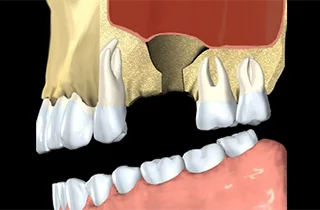
- vascular contraction, the risk of a heart attack, coronary artery diseases,
- cancerous diseases and cancer lesions,
- diabetes,
- arthritis,
- psychiatric disorders (anxiety, eating disorder…),
- fecundity disorder,
- problems related to the protection mechanism of the immune system, etc.
Overall, it can be said that smoking harms nearly all organs of the body and represents a risk factor in the development of many diseases. When performing bone augmentation, the doctor must pay special attention to the general well-being of their smoking patients. Before bone augmentation, they must ask about and assess the patient’s overall health in relation to the risk factors listed above.
Dental-related risks caused by smoking
It has been proven that smoking affects the success of numerous surgical procedures. Please consult our specialists in detail before undergoing any procedure to assess individual risks. Smoking can make the following conditions more likely to affect the oral cavity:
Delayed wound healing, risk of gum disease and infections: Smoking weakens the immune system and increases the risk of periodontitis (severe gum disease). Gum infections can lead to jaw pain, swollen gums, and even bone loss. Bone loss in the jaw: Smoking accelerates bone loss in the jaw, weakening the support of the teeth and causing discomfort. This can make chewing painful and increase the risk of edentulous gingivitis. Plaque formation, periodontitis, dry mouth and mouth irritation: Smoking reduces saliva production and leads to dry mouth, which can cause jaw discomfort, inflammation, and difficulty chewing. A dry mouth also increases the risk of infections that can cause further pain. Oral cancer lesions: Long-term smoking increases the risk of oral cancer, which may be indicated by persistent jaw pain, sores, or swelling. Tooth decay on the tooth and the root, tooth discolouration, and so on…
Does smoking worsen temporomandibular joint disorders?
Nicotine reduces the blood supply to the jaw muscles and joints, leading to stiffness, pain, and discomfort in the temporomandibular joint. Smoking can also cause teeth grinding (bruxism) and worsen jaw joint pain.
Can jaw pain be caused by smoking?
Yes. As a result of the conditions mentioned above, jaw pain can indeed be caused by smoking, and the healing process after bone augmentation surgery can be significantly prolonged. In more severe cases, the feasibility of carrying out the surgical procedure may even be jeopardised. <h4
Yes, you can smoke with dental implants, but we strongly advise against it, as smoking significantly increases the risk of implant failure and other complications listed above.
Does smoking affect the jaw?
Yes, smoking has significant negative effects on the jaw and overall oral health. Unfortunately, everything mentioned above can affect not only the success of bone augmentation surgery but also the effectiveness of general healing processes. Smoking has an impact both before the bone grafting surgery and after it.
Harmful effect of smoking before jaw bone augmentation
There are three main types of bone augmentation: bone augmentation using your own bone, donor bone, and synthetic materials. In our earlier article, we already mentioned that the doctor always chooses the type of augmentation after consulting with the patient and considering the patient’s condition. Each procedure has advantages and disadvantages. Unfortunately, smoking can further restrict the available options. Thus, smoking can directly influence which type of bone augmentation the doctor chooses.
Harmful effect of smoking after jaw bone augmentation
A possible risk associated with bone augmentation surgery is the development of inflammation and bleeding. Smoking generally reduces the blood supply to the surgical site. This presents serious dangers. The toxins and nicotine in tobacco narrow the blood vessels, meaning that circulation is less able to transport toxins and waste products away from the surgical site. Narrowed blood vessels can also transport fewer nutrients and less oxygen. All these processes can significantly affect the proper healing of the wound created during bone augmentation.
Does smoking stop bone healing?
Generally not, but smoking significantly slows bone healing and, in severe cases, can even stop it completely. Due to the reasons listed above, our doctor will advise you not to smoke during the post-operative period.
How long should you avoid smoking after bone augmentation?
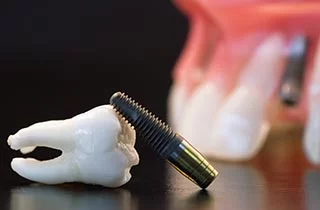
Yes, you can smoke with dental implants, but it is strongly discouraged, as smoking significantly increases the risk of implant failure and other complications. Here’s why:
What if you cannot stop smoking?
 If quitting is difficult, follow these tips to reduce the risk:
- Avoid smoking for at least 1–2 weeks before and after the procedure to improve healing.
- Maintain excellent oral hygiene to prevent infections.
- Visit your dentist regularly for check-ups and professional cleanings.
- Use nicotine patches instead of smoking during the healing phase.
Further advice on the prevention of bone loss, or possible problems after bone augmentation
